
Courses / Fundamentals of Biomedical AI Research
Module 1 of 7
Fundamentals of Biomedical AI Research
Build a strong foundation in biomedical AI. This module introduces core AI concepts, the full AI project lifecycle, and the principles of rigorous, reproducible research. Learners explore how to design biomedical AI experiments, evaluate model reliability, and collaborate effectively in multidisciplinary teams.
Free
Format · Online
Start date · Aug 31, 2026
Duration · 2 weeks
Time · 5 hrs / week
Microskills · 7
CME credits · 11
What you will gain
Course Outcomes
Integration of AI techniques
Integrate AI and ML into healthcare research and clinical practice.
Real-world data application
Use real medical data and case studies to address healthcare challenges.
Practical AI skills
Work with code-free AI/ML tools — no programming knowledge needed.
Critical thinking
Analyze complex healthcare problems through AI-driven insights and methodologies.
What you will learn
Microskills in this Module
Each module covers 5 AI microskills plus one Scientific Rigor and Reproducibility (SRR) and one Responsible Conduct of Research (RCR) microskill.
- Demystifying artificial intelligence
- Artificial intelligence lifecycle
- Designing biomedical AI experiments
- Training, validation, and generalizability
- Leveraging multidisciplinary team strengths
- Basics of scientific rigor and reproducibility
- Mentorship and peer review in biomedical AI
Meet your instructors
Expert Faculty from the University of Florida

Azra Bihorac MD, MS
Senior Associate Dean for Research Affairs · Director, IC3

Benjamin Shickel PhD
Asst. Professor · Associate Director, IC3

Tyler Loftus MD, PhD
Associate Professor of Surgery · Associate Director, IC3

Ashish Aggarwal MS
Instructional Associate Professor
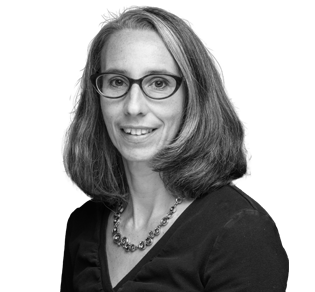
Elizabeth Palmer PhD
Asst. Director of Training & Education
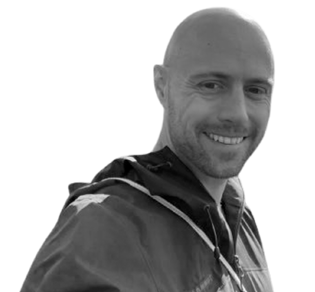
Jeremy Balch MD
General Surgery Resident

Yingbo Ma PhD
Data Scientist

Meghan Brennan MD, MS
Asst. Professor of Anesthesiology
Continue learning
Other Modules
Ready to enroll?
Free enrollment. No coding required. Two cohorts per year — Spring and Fall.
